The modern digital environment is dynamic, with consumers increasingly accustomed to convenience, whether it is shopping, booking a cab, or managing finances. Embedded finance platform is one significant innovation that makes this possible. It is redefining how financial services are delivered, making them seamlessly available within non-financial platforms. Let’s explore what embedded finance means, how artificial intelligence (AI) is powering it, and what the future holds.
Embedded Finance
Think of a scenario where you are shopping on an e-commerce website. During checkout, you are given the choice to pay later or maybe get a small loan to purchase an expensive item, like a laptop. You did not go to a bank, you simply clicked a button. That is embedded finance in action.
Embedded finance is the integration of financial services such as payments, loans, or insurance into non-financial platforms. It is not necessary to go to a bank separately. Instead, financial tools are embedded into the existing platform, whether it’s an app, a website, or even a digital wallet.
The Importance of Embedded Finance for Banks
Banks are no longer the only players in the financial world. Tech giants, fintech companies, and even e-commerce platforms are offering financial services. However, banks continue to hold the upper hand by providing back-end infrastructure, licenses, and regulatory assistance.
- Reduced Cost of Customer Aquisition: Banks invest a lot of money in acquiring new customers. With embedded finance, the customers are already using the partner app. Thus, banks don’t have to advertise or chase them.
- New Customers and Revenue: By collaborating with apps and platforms, banks can reach people who might never walk into a branch. It is a win-win situation. The app gets to offer additional services, and the bank earns a commission.
- Better Data Usage: Embedded finance gives banks access to data that they did not have before, like shopping patterns or travel plans. AI can use this data to create better financial products.
The Role of AI in Embedded Finance
The most fascinating thing now is- how AI is making embedded finance smarter, faster and more personal. AI in banking and embedded finance helps speed up the analysis of huge amounts of data, like better credit checks, smarter fraud detection, personalized offers and much more.
- Personalized Offers: AI can learn from the customer's transaction or shopping history. If they often shop for gadgets, AI may recommend easy EMI plans or if they frequently order food, banks can offer cashback or pay-later options through this platform. These offers improve the relevance of the product and boost conversion rates for banks.
- Smarter Credit Decisions: AI can instantly analyze a customer’s shopping history, mobile usage, bill payments, and other information. This helps banks decide if they are eligible for a loan, even if they have never taken one before. This is helpful for people with no formal credit history, such as students.
- Advanced Fraud Detection: AI is good at spotting unusual behavior, like an attempt to access an account from a different country. It is still developing its accuracy, but it enables banks to act swiftly to protect institutional assets and customer trust
The Future of Embedded Finance
Embedded finance continues to expand, and the future appears to be even more promising. With the use of AI, personalization, and partnerships between banks and different platforms, banks can embed financial services into digital experiences. McKinsey forecasts the revenue from embedded finance could surpass €100 billion in Europe by 2030. For banks, embedded finance opens the door to becoming omnipresent in customers’ daily lives. From paying rent to buying a car or investing in stocks, financial tools will be built into everyday apps. There won’t be a need to open a banking app. Everything will be one click away.
Millions of people in various countries still don’t have a bank account. Embedded finance has the ability to integrate them into formal economy through mobile apps. Farmers or small shop owners can access credit, insurance, and savings tools. This allows banks to expand their customer base at lower acquisition costs. It allows secure access to the customer’s financial data with their consent. This is made possible by Application Program Interfaces (APIs). With AI-powered APIs, banks and partners can share data faster and safer, creating smoother user experiences. In this way, assisted banking creates a collaborative ecosystem that fosters innovation and delivers superior customer experiences across platforms.
Challenges Ahead
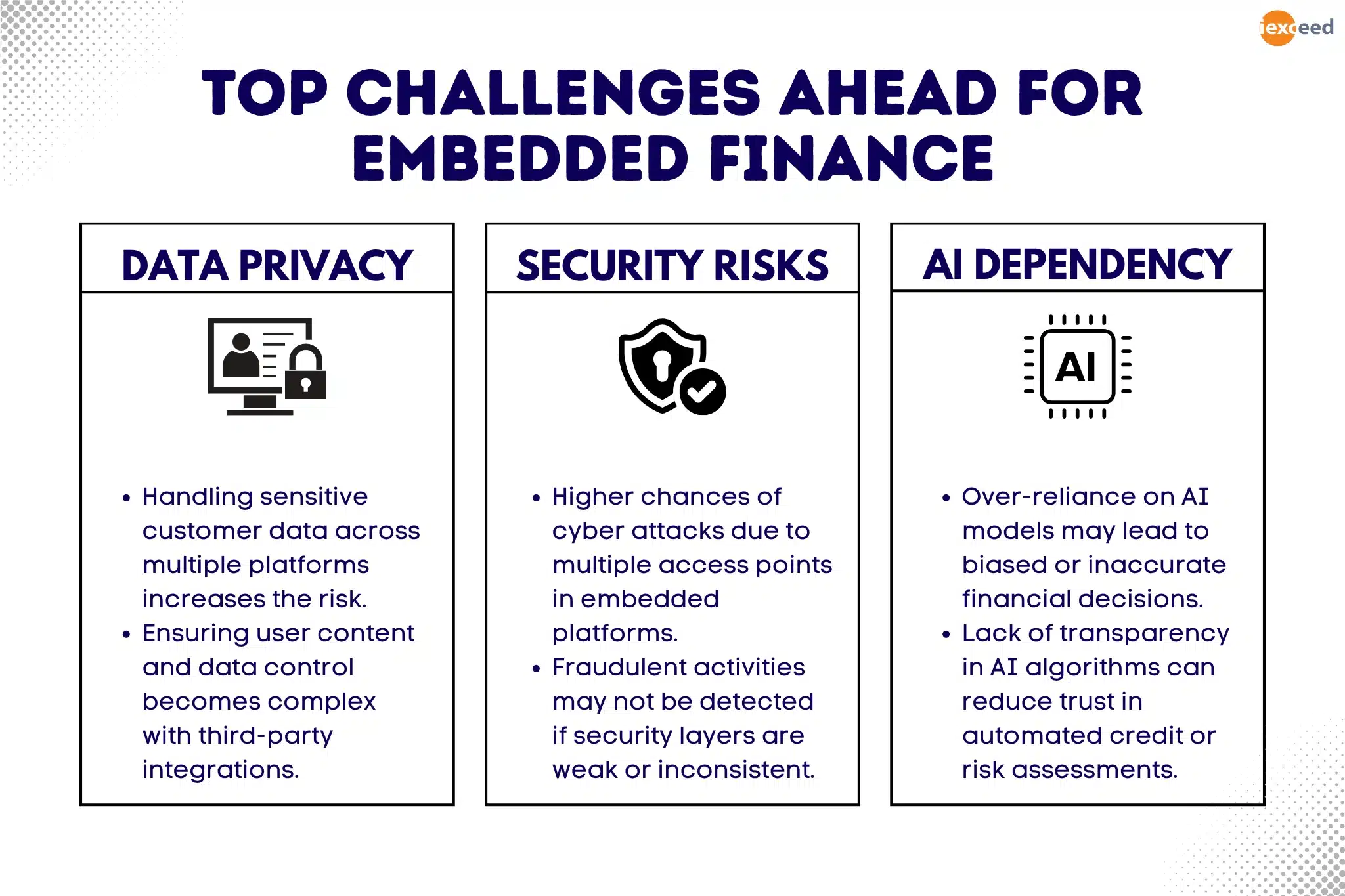
The obstacles that lie in the way include safeguarding data privacy, preventing cybercrime, maintaining regulatory compliance, avoiding algorithmic bias and educating users to understand and have faith in embedded finance integrated into everyday digital platforms.
- Data Privacy: Due to the amount of data being shared, robust data protection laws and ethical use of AI are essential.
- Over-reliance on AI: Even though AI makes tasks easier and smoother, human verifications are necessary to ensure accuracy and safety.
- Security Risks: To prevent fraud or hacks, cybersecurity should be a top priority for banks.
In Conclusion
Embedded finance is the future of how we interact with money. Financial services are becoming more accessible and individualized with AI as the driving force. It is turning everyday apps into financial platforms and reshaping the banking industry.
For banks, it is an opportunity to evolve, partner with modern businesses, and offer better services. For users, it’s about more convenience and better financial access. As we move ahead, with the power of AI, embedded finance has the potential to make finance truly universal and user-friendly. The key to success will be to balance innovation with trust, personalization with privacy, and speed with security.
To know more about how i-exceed can help with your digital banking initiatives, get in touch with us at marketing@i-exceed.com .